Into the next round // 10.04.2024
You work for weeks on a great project. Now you want to present what you've accomplished, connect with interested people, and keep the momentum going. So you organize a workshop. But registrations are slow, and many people don't show up on the day. People assure you: the topic is exciting! They'd come if it weren't for the kids, work, hobbies…
Have workshops had their day in an era where time is a scarce resource?
You've probably already guessed it: you can't answer this question across the board – it depends. Workshops have both advantages and disadvantages. So you need to be very clear about what you want to achieve with your workshop.
Do you want to reach many different people? Rather difficult for a workshop. Want to dive deep with a small group? Let's go!
The best approach is to ask yourself at the start of your project whether a workshop is the right format to achieve your project goals. And if not, what alternative formats fit your objectives.
Here's a little decision guide for that.
1. Communicate on equal footing
Personal exchange makes it easier to gather different opinions and goals. It facilitates going "in depth."
2. Create and maintain motivation
Meeting each other, chatting, and taking time for questions. Motivating people to continue their engagement in the project.
3. Build and strengthen networks
Networking engaged people ensures that projects don't disappear after completion or even get further developed.
4. Say thank you
With an aperitif or small gift, you thank all contributors and participants for their engagement.
1. Entry barrier
Not everyone has the resources or willingness to participate in a physical workshop.
2. Participant selection
Because of the personal effort involved (time, travel, etc.), mostly highly motivated people attend. This skews the group and can influence the impact/results.
3. Missing motivation / insufficient return
Events with "work effort" (= workshop) compete with pure entertainment offerings (gaming, sports, etc.).
4. A lot of effort for few people
Organizing workshops is resource-intensive. So you need to carefully consider whether you have these resources and want to deploy them.
Here are some ideas for alternative formats. Of course, your creativity knows no bounds:
Finally, how you plan the workshop also has a big influence on whether it succeeds. You should ask yourself two questions:
How much effort is required to participate?
The higher the effort, the higher the entry barrier. A physical event requires time and energy. What time is the workshop? Who can organize that? How far do potential participants have to travel?
What does the person get out of attending?
The more a person "gets back" from the event, the more motivated they are to actually come. What do they learn? Is there food or drink? Do they get something useful, like a certificate?
You can think of effort and return as a balance scale. If effort outweighs return, the person will very likely not come to the workshop. If return outweighs effort or the scale is balanced, people will happily attend.
As organizers, we can influence some effort factors and many return factors.
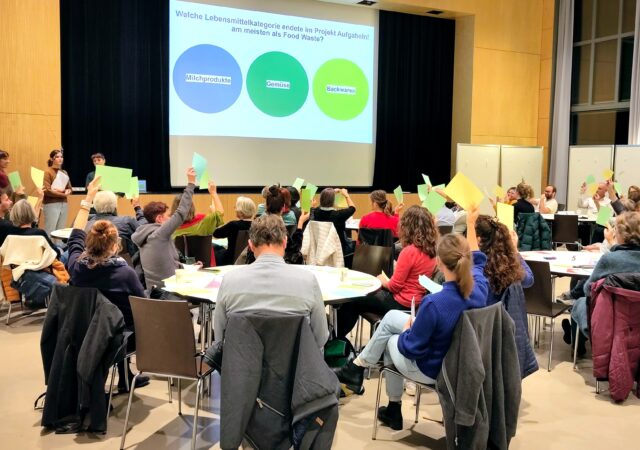
We always greatly value personal contact and exchange with participants. For us, workshops are often a project highlight. That's why we continue to organize physical workshops regularly, even in the age of calls and webinars. After all, with citizen science and participatory projects, you want to bring people together. And the best way to do that is face to face.